Obituary: Stanley Goodall (31 May 1934 – 11 June 2026)
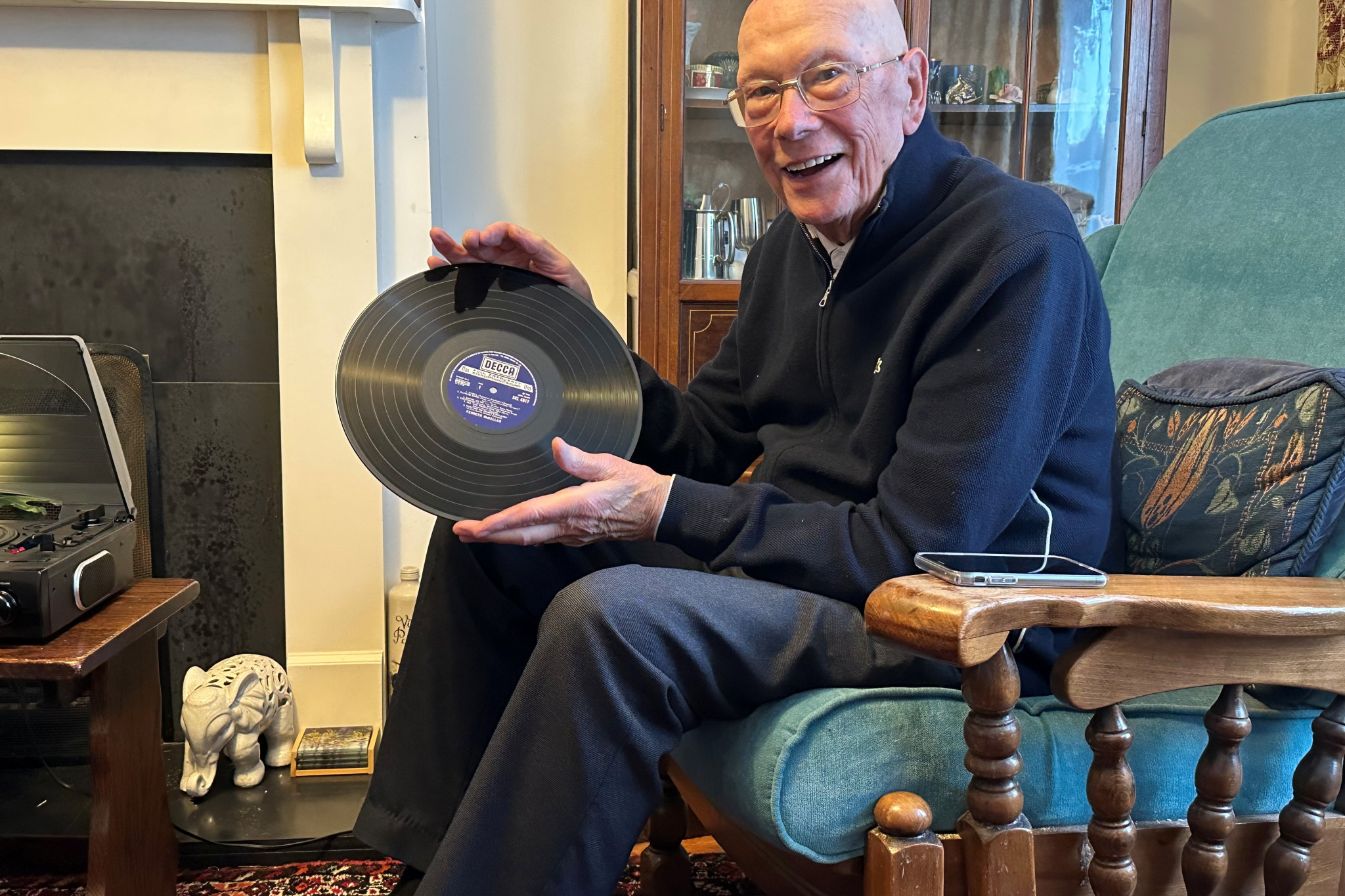
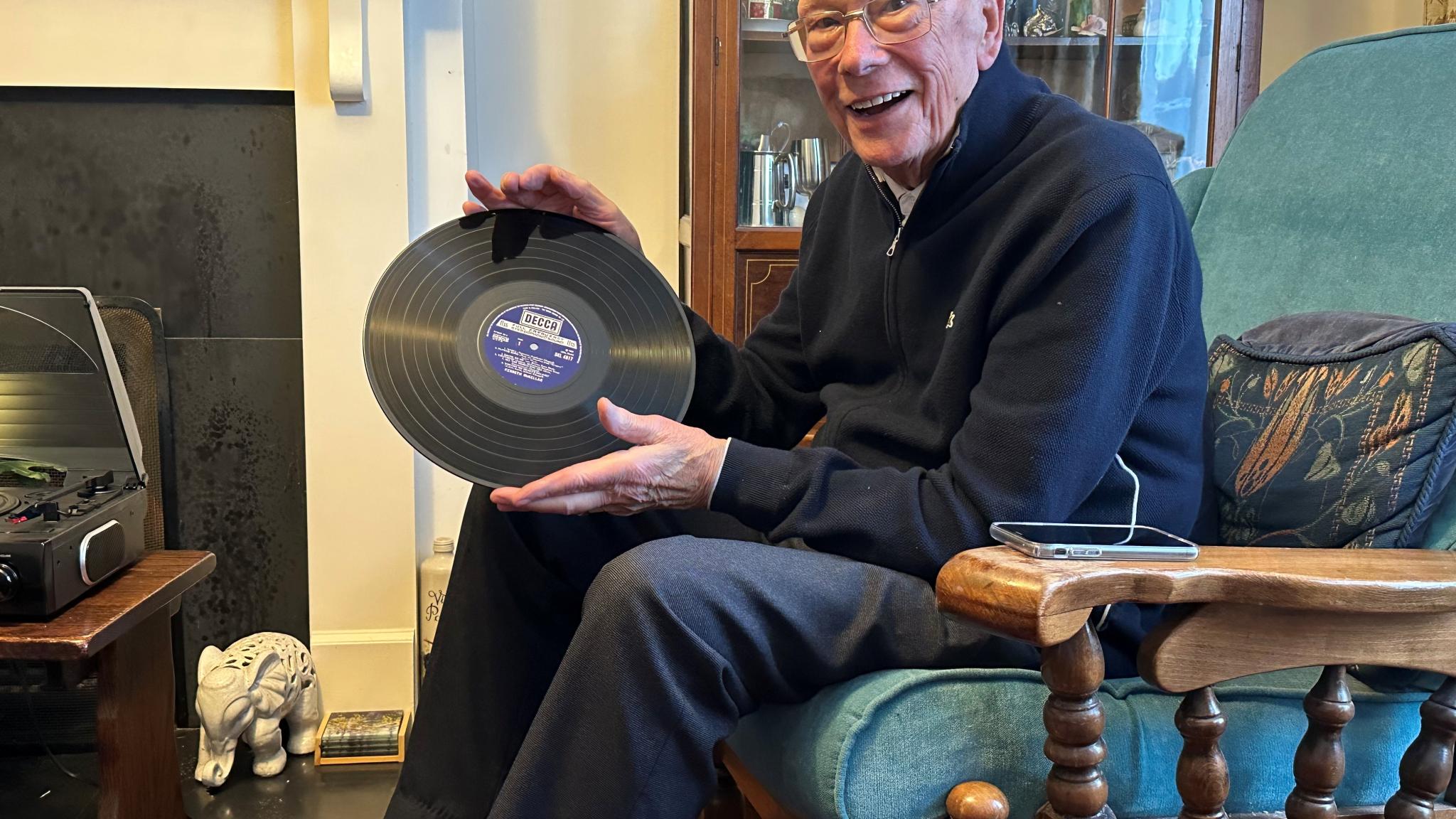
Stanley (‘Stan’) Goodall, one of the recording engineers who shaped the sound of Decca’s golden era, was born on 31 May 1934 in Paddington, London, and joined Decca Records on 28 December 1949, aged fifteen. His career would go on to span nearly every audio medium of the twentieth century, from wax to compact disc.
When Stan arrived at Decca, he was one of only about twelve employees. His potential was recognised early by balance engineers Arthur Bannister and Arthur Lilley, who soon inducted him into their West Hampstead studios and the world of recorded sound. He learned his craft in a company then at the forefront of its field, under figures such as the Technical Director Arthur Haddy and Kenneth (‘Wilkie’) Wilkinson, whose pioneering work on ‘Full Frequency Range Recording’ had given Decca its competitive edge in the post-war years. It was here that Stan’s own talent was able to flourish, as 78rpm discs gave way to LPs and mono opened into stereo.
In today’s immersive world of Dolby Atmos, it seems almost unbelievable that stereo was not only regarded with suspicion during those immediate post-war years but was tolerated only as a secondary technique to the principal mono product. Recorded by an additional balance engineer through different microphones to a separate tape machine, those stereo tapes remained untouched for many years, and it was not until 1958 that Cyril Windebank oversaw the cutting of those tapes to disc. By then Stan was nine years into his career, already versed in every stage of the recording chain and experienced in cutting 78s, 45s and LPs, including discs of recordings made in Africa by the engineer Ken Cress, adventurous work for its time. Recognising both his ability as an outstanding cutting engineer and his appetite for new methods, Windebank entrusted him with some of Decca’s first stereo discs.
His work with Windebank brought him repertoire and interpretations that were brand new to him, and he enjoyed the challenge. Among the first recordings he was entrusted to transfer from tape to disc was Kenneth Alwyn’s celebrated 1812 Overture with the London Symphony Orchestra, an early sign of the work that would come his way. The cutting of Solti and Culshaw’s landmark Das Rheingold with the Vienna Philharmonic proved a more significant challenge still. The great anvil blow near the work’s end pushed the system to its limits, and it was the balance engineer Gordon Parry who came in to help reproduce it successfully on disc. Parry, delighted with the result, became an important mentor, giving Stan his first opportunities in Vienna. His method was to set a studio up, tell Stan to get on with the session and leave him to it.
From the cutting room and the lathe, Stan naturally progressed to microphones and tape machines at venues across the country. Gradually, his career took off across Europe, the United States and Canada, and having learned his craft from Kenneth Wilkinson, Arthur Haddy, Arthur Bannister and Arthur Lilley, Stan went on to become a key player in defining Decca’s ‘Golden Era’, which lasted from the 1950s to the 1990s. Stan’s contributions to legendary Decca recordings include: the 1969 Argo recording of Vivaldi’s Four Seasons by the Academy of St Martin in the Fields with Alan Loveday and Sir Neville Marriner; the 1970 set of Verdi’s Macbeth with Dietrich Fischer-Dieskau, Elena Souliotis, Nicolai Ghiaurov, Luciano Pavarotti and Lamberto Gardelli; the 1971 Christmas Festival album with Renata Tebaldi, a personal favourite of Stan’s; the 1987 disc of Bartók’s Concerto for Orchestra with Charles Dutoit and the Montreal Symphony Orchestra, which was nominated for the Best Engineered Classical Recording at the 1990 Grammy Awards; the 1990 recording of Carl Orff’s Carmina Burana with Herbert Blomstedt and the San Francisco Symphony, which won the 1993 Grammy for Best Choral Performance; the 1993 CD of The Impatient Lover with Cecilia Bartoli and Sir András Schiff, which won the 1995 Grammy for Best Classical Vocal Performance; and the 1994 discs of Anton Rubinstein’s Piano Concerto No. 4 with Shura Cherkassky and the Royal Philharmonic Orchestra conducted by Vladimir Ashkenazy and of Mendelssohn’s Four Pieces for String Quartet with the Ysaÿe Quartet that marked Stan’s last recording sessions before retirement.
During his forty-five years with Decca and its subsidiary Argo, Stan worked on a dazzling array of albums that featured some of classical music’s finest exponents, including Sir Georg Solti, Vladimir Ashkenazy, Dame Joan Sutherland, Luciano Pavarotti, Riccardo Chailly, István Kertész, Sir András Schiff, Radu Lupu, Alicia de Larrocha, Jorge Bolet, Sir Neville Marriner, George Guest, John Ogdon, David Munrow, Sir Roger Norrington, Felicity Palmer and the Aeolian Quartet.
Beyond the faders, Stan was renowned for his good humour and guileless charm, qualities that landed him in trouble more than once, even earning him the occasional ‘sack’ from Arthur Haddy, though he always found his way back into the fold. One such indiscretion involved a starting pistol which he had been sent to buy for a Billy Cotton LP. After trying to make it work all the way home, Stan finally managed to trigger the pistol back at Decca headquarters. It went off with a deafening bang, which prompted fits of involuntary laughter. Upstairs, however, Haddy was entertaining the head of Decca, Sir Edward Lewis. Incandescent with rage, Haddy rushed down and shouted: ‘You’re sacked. Go!’ But when Stan showed up for work the following Monday morning, Haddy barked: ‘What are you doing here? I thought I’d fired you!’ Stan replied simply: ‘I didn’t think you meant it.’ Once Haddy had walked away muttering, he got straight back to work.
Above all, Stan channelled his efforts into keeping the Decca ethos alive. He always pushed technical boundaries and was soon dubbed the ‘King of the Red Lights’ by his peers. Never one to shy away from an acoustic challenge, Stan would get a recording’s absolute maximum range without creating distortion. He regularly pushed contemporary technology to its limits and allowed the results to speak for themselves. When he announced his retirement in 1994, Decca, reluctant to lose his wealth of experience, asked him to help guide the next generation—a role he took to with characteristic grace and came to regard as two of the most rewarding years of his career. But what made Stan a great balance engineer was not simply his technical expertise. He had a remarkably intuitive grasp of balance—an innate feel for what would work and what would not—and he relied on that instinct with exceptional success.
Ultimately, there are far more wonderful anecdotes and stories around Stan than any tribute could hold, the kind still fondly recounted at Decca reunions in Bounds Green and beyond. But what those who knew him will remember above all was his irrepressible good cheer, and the warmth and joy he brought to every room he worked in. Stanley Goodall found his place in the history of recording, and he will live forever in the hearts and minds of all who knew and worked with him.
Stanley Goodall died peacefully at home on 11 June 2026, aged 92, and is survived by his wife Julie and their daughters, Pippa and Rosanna.
David Gleeson
Head of Recording, Royal Academy of Music
David Gleeson’s first job out of university was working for Decca, where he was taught by none other than Stan